23 Jun 2026
Player Behavior Transformations During Complimentary Access Periods for High-Volatility Titles
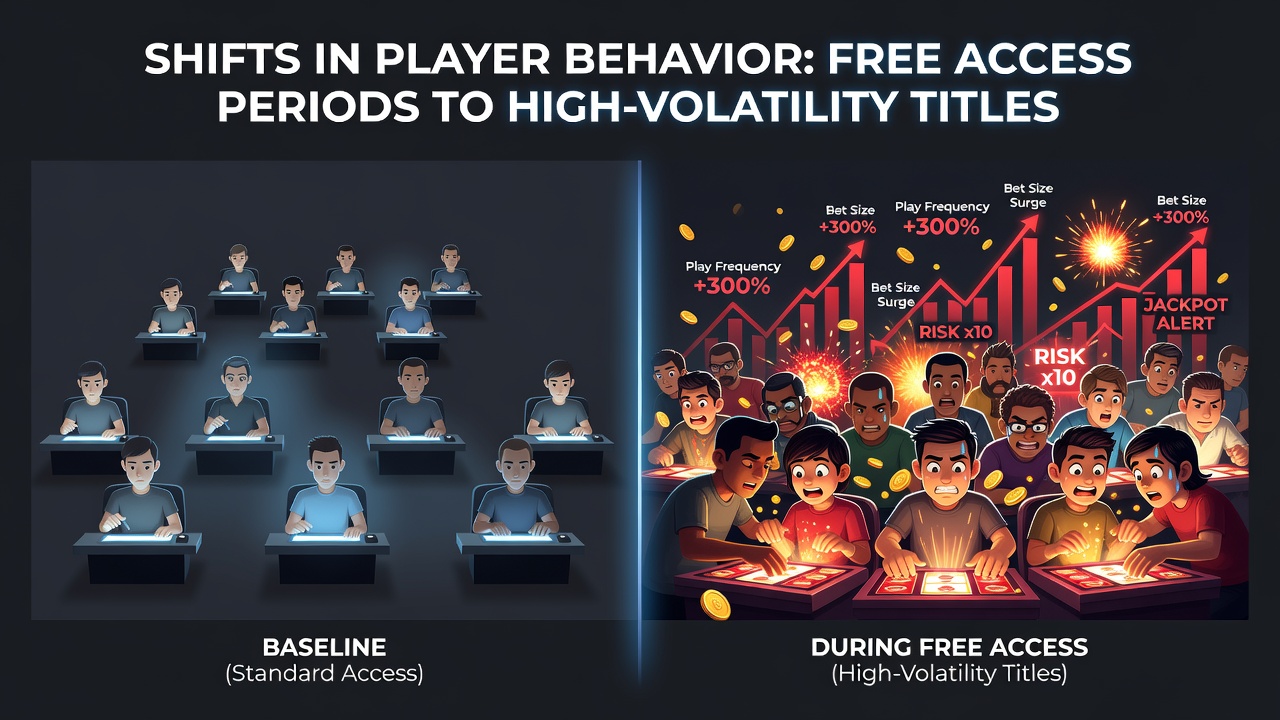
High-volatility titles draw players who seek substantial payouts even though these games deliver infrequent wins, and free access periods allow extended sessions without financial commitment which leads researchers to track distinct changes in how participants approach risk and session length. Observers note that individuals often extend their playtime significantly during such windows because the absence of monetary stakes reduces hesitation around bonus features and high-stake spins.
Defining High-Volatility Mechanics and Free Access Windows
High-volatility slots operate with mathematical structures that produce larger but rarer rewards compared to low-volatility counterparts, and this design encourages players to adjust their expectations when they gain unlimited demo opportunities. Free access periods typically occur through promotional campaigns or platform trials where users explore titles without depositing funds, and data from industry reports shows participation rates climbing during these intervals as people experiment with strategies they might avoid in paid modes. Researchers discovered that players frequently test multiple high-volatility options in sequence rather than sticking to a single game because the zero-cost environment supports broader exploration without penalty.
Documented Shifts in Session Duration and Risk Tolerance
Analyses of user logs during free periods reveal that average session lengths increase by notable margins when high-volatility titles become available at no charge, and participants tend to activate bonus rounds more aggressively since losses carry no real consequence. One study revealed that individuals who normally favor conservative bet sizing begin placing maximum wagers in demo formats, which indicates a temporary elevation in risk tolerance driven by the safety net of free play. Those who've studied this know that repeat visits to the same title often follow initial trials, and engagement metrics climb as users refine their understanding of volatility patterns through repeated exposure.
What's interesting is how these behavioral adjustments appear consistent across different regions, and figures reveal similar patterns whether the access occurs through mobile apps or desktop platforms. Australian Communications and Media Authority reports highlight comparable increases in trial participation during promotional windows, and such data helps operators anticipate demand spikes without relying solely on paid-user statistics.
Influences from Platform Design and Timing Factors
Platform features such as progress trackers and achievement badges further shape behavior during free access, and users respond by pursuing completion milestones that extend their time in high-volatility environments. June 2026 saw several operators introduce synchronized global demo events for new releases, and participation data indicated heightened activity levels as players coordinated sessions across time zones to compare outcomes in real time. External elements like social sharing integrations also contribute, since participants often post their demo results which encourages additional sign-ups and lengthens collective engagement chains.
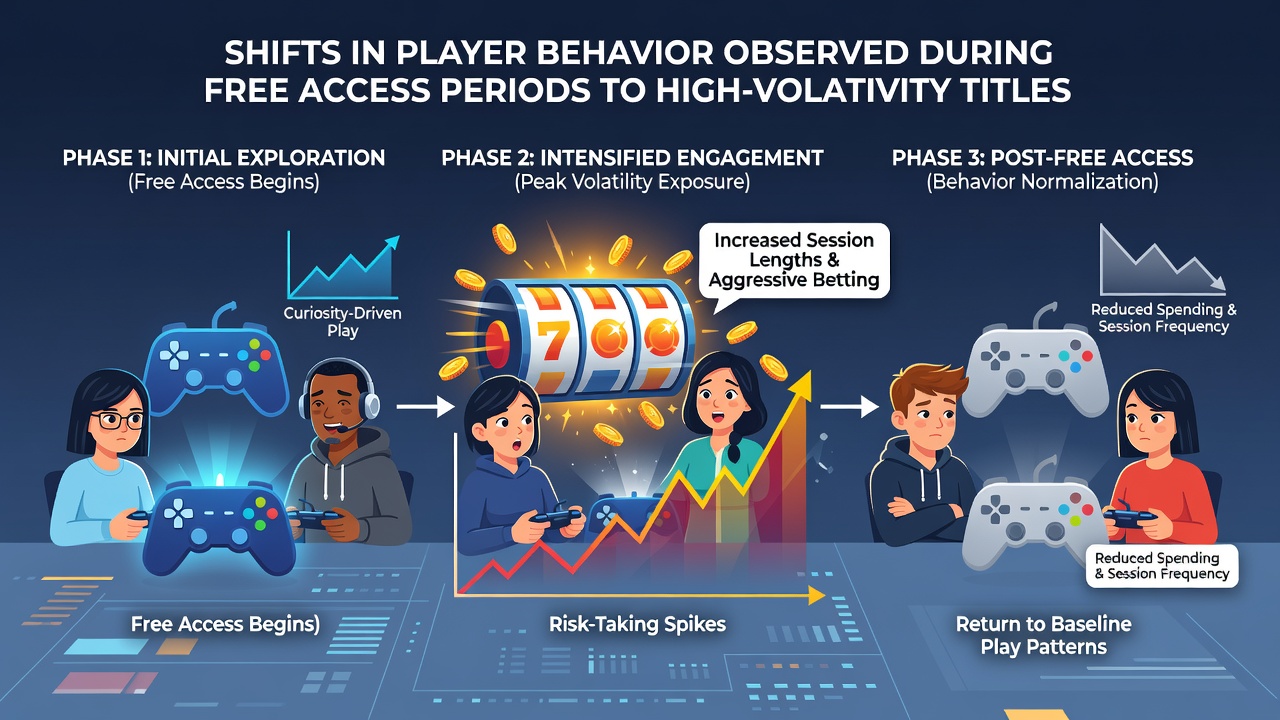
Yet timing plays a critical role because free access aligned with major sporting events or holidays tends to amplify the observed shifts, and players integrate these sessions into existing routines more readily. University research from the University of Nevada Las Vegas examined similar trial periods and found correlations between extended demo access and subsequent paid activity patterns once the free window closed.
Patterns in Bonus Feature Interaction and Strategy Testing
Players demonstrate increased willingness to explore complex bonus mechanics when costs are removed, and this leads to more frequent activation of features like cascading reels or multiplier ladders that define many high-volatility releases. Evidence suggests that individuals experiment with varied bet configurations across consecutive spins during these periods, and the resulting data logs show broader distribution of choices than in standard paid sessions. Observers note that some users develop personalized approaches to volatility management through this trial process, and such adaptations occasionally carry over when they transition back to real-money play.
But here's the thing: not every behavioral change persists beyond the free interval, and retention studies indicate that only a subset of demo participants maintain elevated risk thresholds once financial stakes return. This distinction helps clarify the temporary nature of certain adjustments while highlighting lasting impacts on game familiarity and feature awareness.
Conclusion
Free access periods to high-volatility titles produce measurable transformations in how players manage time, risk, and feature interaction, and aggregated data from multiple sources confirms these patterns across diverse platforms and regions. Operators who monitor these shifts gain clearer insights into user preferences, and continued examination of trial behaviors supports more accurate forecasting of engagement trends moving forward.