6 Aug 2026
Evolving Bonus Feature Designs in Portable Progressive Slot Experiences
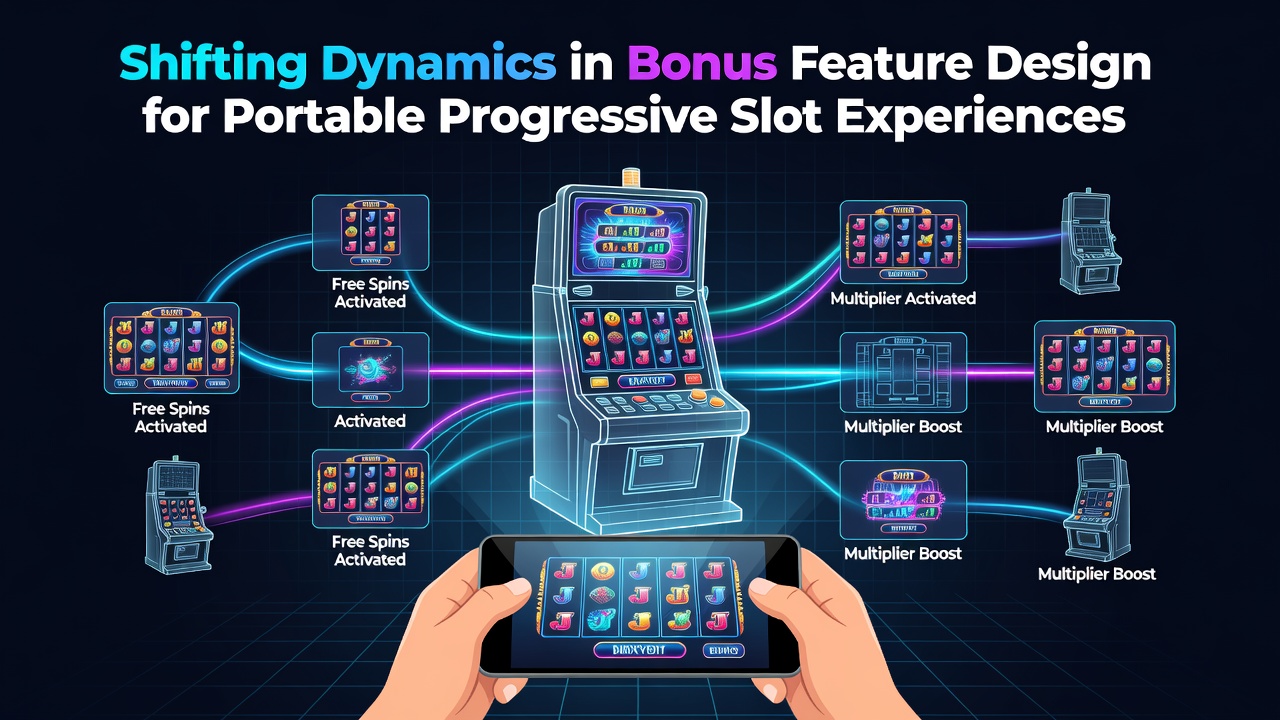
Portable progressive slot experiences have undergone measurable changes in bonus feature architecture over recent years, driven by hardware constraints and player interaction data collected across multiple platforms. Developers adjust trigger conditions, multiplier scaling, and progressive contribution rates to suit smaller screens while maintaining the core jackpot accumulation mechanics that define these games.
Core Elements of Progressive Mechanics
Progressive systems pool contributions from individual wagers into shared prize pools that increase until triggered, and portable versions now incorporate adaptive scaling where the contribution percentage shifts based on session length metrics tracked by backend servers. Data from regulatory filings in various jurisdictions shows that mobile-optimized progressives allocate between 1.5 and 3 percent of each bet to the jackpot pool, with adjustments implemented quarterly to balance player retention figures against operational costs.
Bonus rounds in these titles typically activate through scatter combinations or random events, yet recent designs integrate touch-responsive mini-games that require precise gestures suited to handheld devices rather than mouse clicks. Researchers tracking engagement patterns report that sessions exceeding 25 minutes on mobile devices exhibit higher completion rates for multi-stage bonus sequences when those sequences include visual cues scaled for portrait orientation.
Adaptations for Mobile Hardware Constraints
Screen size limitations have prompted designers to consolidate information panels into expandable overlays, allowing players to access paytable details and jackpot meters without interrupting gameplay flow. According to figures released by the Nevada Gaming Control Board in mid-2026, mobile progressive titles released after January of that year demonstrate a 12 percent increase in average bonus round duration compared with earlier iterations, attributed to refined animation compression techniques that reduce latency on 4G and 5G connections.
Touch input replaces traditional button arrays, which alters how features such as hold-and-spin or pick-and-reveal mechanics function. Observers note that developers now embed haptic feedback loops synchronized with jackpot increments, creating tactile confirmation during progressive meter growth phases that was previously unavailable in desktop environments.
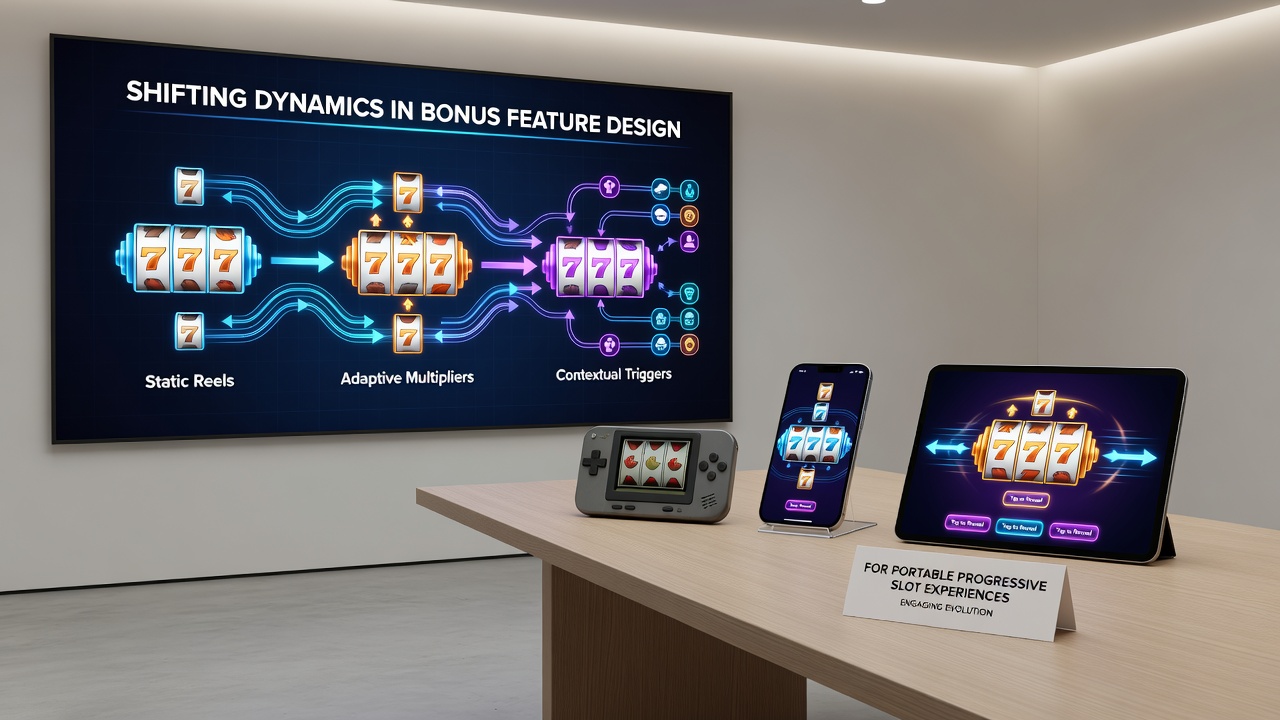
Integration of Real-Time Data and Personalization
Real-time analytics engines now influence bonus frequency by monitoring individual play patterns and adjusting trigger probabilities within predefined regulatory boundaries. A study published by the University of Nevada, Reno gaming research group in August 2026 documented how certain portable progressive platforms modify bonus entry thresholds based on aggregate session data collected from thousands of concurrent users, resulting in variance reductions of up to 8 percent across tested titles.
These systems operate under strict oversight from bodies such as the Alcohol and Gaming Commission of Ontario, which requires transparent logging of all algorithmic adjustments to ensure fairness across geographic regions. As of August 2026, several operators have implemented cross-device synchronization that preserves progressive contribution totals when players transition between tablet and smartphone interfaces during a single session.
Regulatory Influences on Feature Complexity
Jurisdictional rules in Australia and select European markets limit maximum bet sizes and mandate clear disclosure of bonus contribution percentages, prompting designers to streamline feature layers so that progressive elements remain prominent without overwhelming limited screen real estate. Industry reports from the Interactive Gaming Council indicate that compliance updates implemented in the first half of 2026 led to a measurable shift toward modular bonus structures where individual components can be toggled independently to meet local requirements.
Portable platforms benefit from these modular approaches because they allow rapid deployment of region-specific variants while preserving core progressive mathematics across all versions. Those monitoring industry filings observe that titles incorporating such flexibility achieve faster certification cycles in multiple territories simultaneously.
Future Trajectories in Design Patterns
Emerging patterns suggest continued refinement of layered bonus systems that combine short-term mini-features with long-term progressive accumulation. External testing data shared by the New Zealand Department of Internal Affairs shows steady growth in player-initiated bonus buy options within mobile progressive titles, although activation rates remain subject to strict spend limits enforced by platform operators.
Cross-platform compatibility testing continues to drive innovation in how progressive meters display across varying resolutions, ensuring visual consistency without compromising the mathematical integrity of the underlying pools. These technical adjustments reflect ongoing responses to hardware evolution rather than isolated creative decisions.
Conclusion
Shifts in bonus feature design for portable progressive slots continue to align with hardware capabilities, regulatory mandates, and aggregated usage statistics from diverse markets. As platforms evolve, feature sets adapt through incremental modifications that preserve jackpot integrity while accommodating mobile interaction patterns. The documented changes through August 2026 illustrate a sector responding to measurable data points rather than speculative trends.